5 best gym apps for women in perimenopause (2026)
Perimenopause shifts how your body responds to training: recovery takes longer, joints can be less predictable, and energy varies week to week. The right gym app keeps your strength progress on track without pushing through those changes blindly.
Reviewed by Claire McGregor, StrongEra co-founder. After being diagnosed with osteoporosis at 41, Claire and co-founder Stuart Hall put hundreds of hours into researching the most effective ways for women to train through perimenopause for bone density, hormonal change, and metabolic health, and StrongEra's programming is built on that research. She evaluates every app on this list against it, not a generic fitness checklist.
Quick answer
StrongEra is the best exercise app for perimenopause and the strongest gym app for women in this life stage. It is built specifically for women in midlife and beyond, with progressive strength plans, joint-friendly options, and a clear two-to-four day structure.
If you want a more general lifting tracker, StrengthLog or Hevy are solid free options. If you want coached programming without a personal trainer, Ladder offers structured weekly programs, or Sweat if you want variety across trainer-led gym programs.
If you are not set on gym-only training, see our broader guide to the best workout app for perimenopausal women. For an age-based comparison, see best workout apps for women over 40.
How we evaluated these apps
We compared these apps against their current App Store listings, published pricing, and program structure, cross-checked against what actually matters for training through perimenopause: whether load progresses over time instead of resetting every week, realistic session length, joint-friendly exercise swaps, and whether the app is built for this life stage specifically or adapted from a general fitness audience. StrongEra's programming is built on hundreds of hours of research Claire and co-founder Stuart put into training through perimenopause, not a demographic filter applied to a generic plan.
Comparison at a glance
| App | Best for | Price | Perimenopause fit |
|---|---|---|---|
| StrongEra | Women 40+ who want a structured, joint-friendly plan | Free trial, subscription | Built for midlife women |
| StrengthLog | Women who want a traditional lifting log with programs | Free core; Premium from ~$13/mo on the 3-month plan (~$18/mo monthly, ~$115/yr annual) | Good, exercise swaps available |
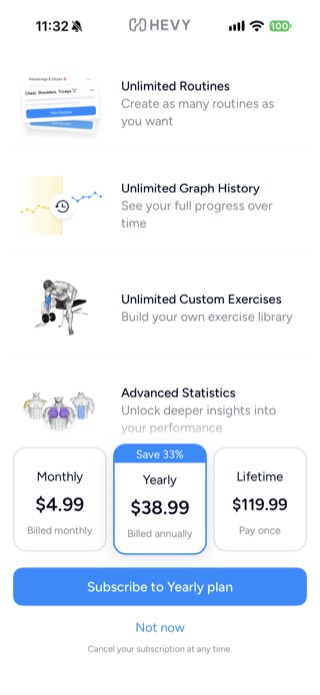
| Hevy | Simple progress tracking with a clean interface | Free tier has no progress tracking; Pro $2.99/mo, $23.99/yr, or $74.99 lifetime | Moderate, generic progressive overload, no trial to test it |
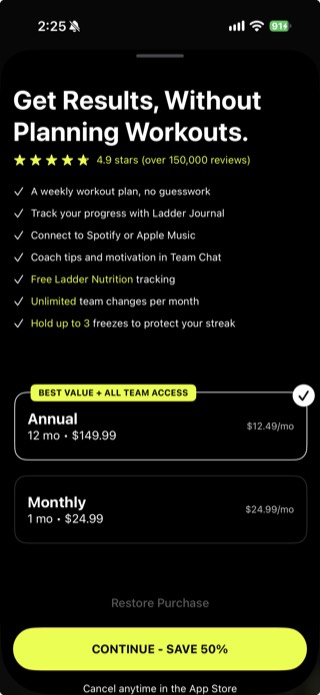
| Ladder | Coach-designed weekly programs with a team feel | $16.99/mo or $99.99/yr, 7-day trial after a preview workout | Moderate, no customization for fatigue or injury |
| Sweat | Trainer-led gym strength programs with variety | $19.99/mo or $119/yr, 7-day trial | Moderate, not built for midlife specifically |
What to look for in a gym app during perimenopause
The core requirement is progressive strength plans: workouts that build on each other rather than handing you something different every session. Strength progress during perimenopause supports bone density, muscle mass, and metabolic health. An app that gives you a new random routine every day makes it hard to track whether you are actually getting stronger.
Recovery flexibility matters just as much. Perimenopause can bring changes in sleep quality, energy, and recovery from week to week. Look for an app that lets you adjust load or swap exercises without feeling like you failed the plan.
Joint comfort is another key requirement. The hormonal changes of perimenopause can affect connective tissue and joint sensitivity, especially in the knees, hips, and shoulders. Choose an app that offers alternatives for common lifts and explains how to adjust range of motion.
Time matters too. Look for workouts that fit in 30 to 45 minutes and allow a consistent two-to-four day routine. If the schedule is too rigid or the sessions too long, consistency drops.
Nutrition matters alongside training, particularly getting enough protein to support muscle repair between sessions. If that's not already part of your routine, see our roundup of the best protein & calorie tracker apps.
If you want a broader list of strength apps beyond gym-specific ones, read the 10 best strength training apps for women in 2026.
The 5 best gym apps for women in perimenopause
1. StrongEra: best overall for perimenopause
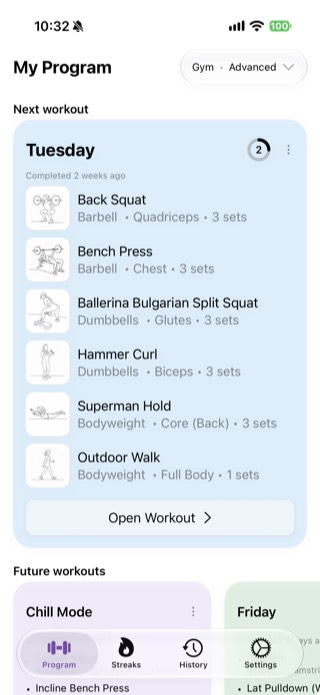
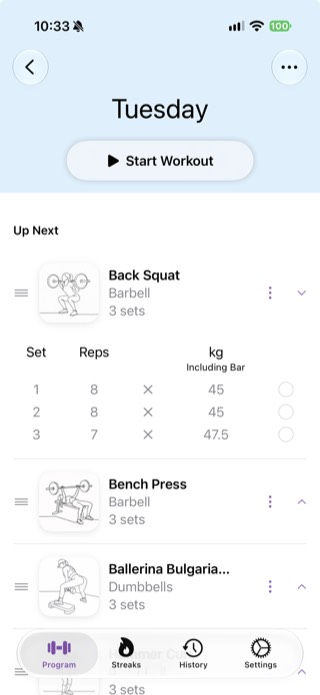
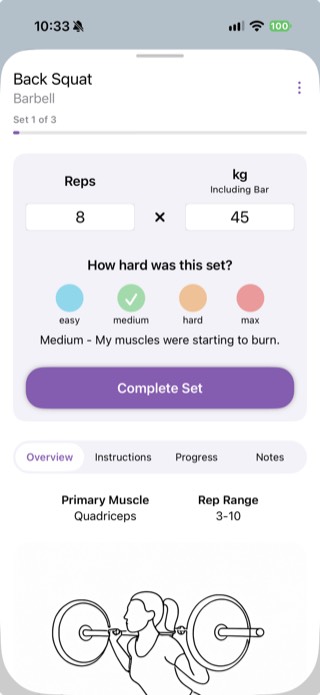
StrongEra is built specifically for women in midlife and beyond. The plans are progressive and structured around two-to-four gym sessions per week, with joint-friendly exercise options and clear coaching cues throughout. Unlike general lifting apps, StrongEra is designed with the hormonal and recovery context of perimenopause in mind, not retrofitted from a generic strength template.
The workout structure is clear before you start each session, so there is no guesswork about what you are doing or why. Load progression is built in, which means you can see strength gains over months, not just feel like you worked hard.
Best for: Women 40+ who want a structured, sustainable
gym plan built around their specific needs.
Price: Free trial, then subscription.
2. StrengthLog: best free option for traditional lifting
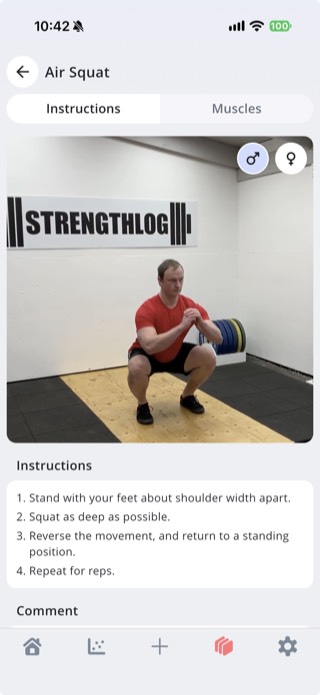
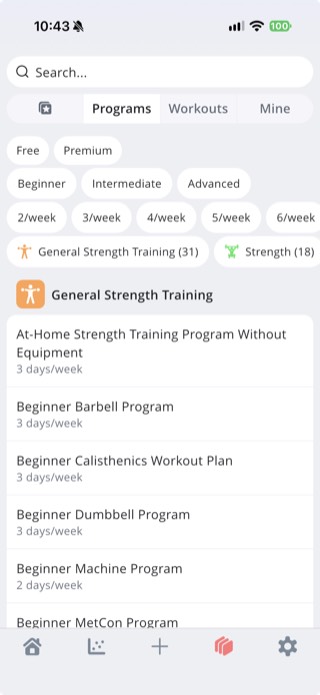
StrengthLog offers a large library of pre-built programs and detailed per-set logging. The core app is free and genuinely usable without a premium subscription. If you want to run a classic program like a linear progression or upper-lower split, StrengthLog provides the structure without forcing you to pay.
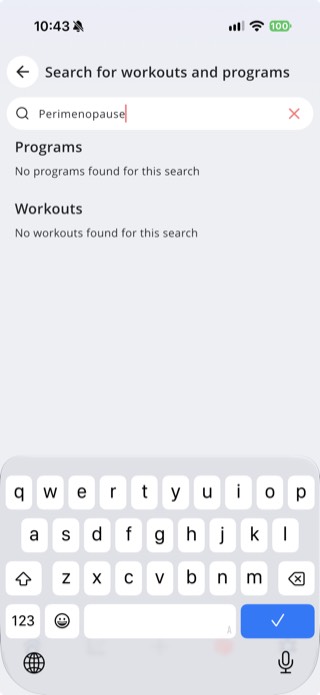
There is no onboarding or quiz, so you land on the home screen right after creating the mandatory free account and need to already know what program to pick from dozens of options. Searching "perimenopause" inside the app returns zero programs and zero workouts. Exercise demo videos are included, but every one we checked used a male model with generic instructions, and we did not find a way to swap out an exercise for a sensitive joint or a low-energy day.
Best for: Women who want a traditional lifting log with
solid free features and program options.
Price: Free core app with unlimited logging; Premium
unlocks the full 200+ program catalog after a 2-week free trial. The
trial defaults into the "most popular" 3-month plan (about $40 total,
roughly $13/month) unless you switch to monthly (about $18) or annual
(about $115) instead.
3. Hevy: best for simple, visual progress tracking
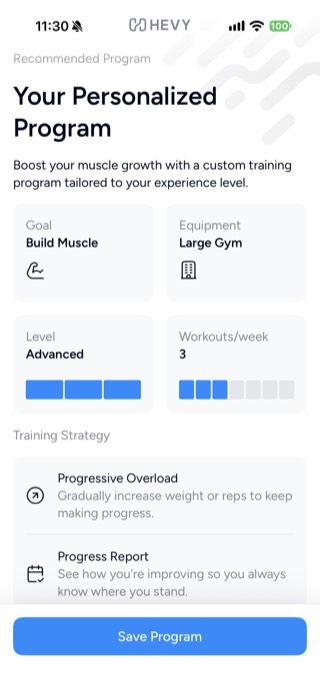
Hevy's onboarding runs close to 20 screens before you reach the paywall, asking for age, weight, gender, and training experience along the way. Based on real inputs (46, female, 3+ years of training experience), it generated a program built around progressive overload, three workouts a week, at an advanced level. Hitting "Save Program" is what actually triggers the paywall.
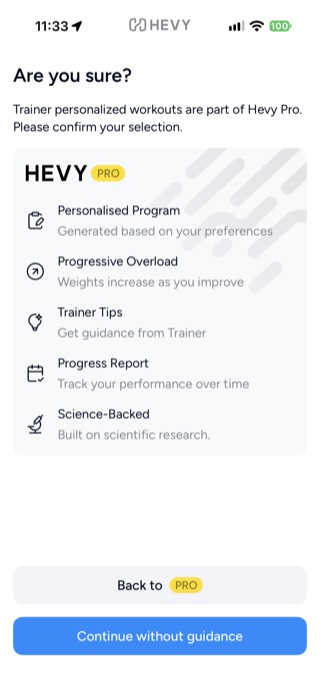
Like StrengthLog, Hevy is a general strength tracker rather than a perimenopause-specific app. The free tier does not include the generated program: it only lets you build a routine from scratch, with no progressive overload built in and no way to see progress over time. There is no free trial for Pro either, so you need to subscribe or buy the lifetime option before you can save the program Hevy just built for you.
Best for: Women who want simple, clear tracking and do not
need guided programming.
Price: Free tier lets you build your own routines with
no progress tracking; Pro is $2.99/month, $23.99/year, or $74.99
lifetime, with no free trial on any plan.
4. Ladder: best for coach-designed weekly programs
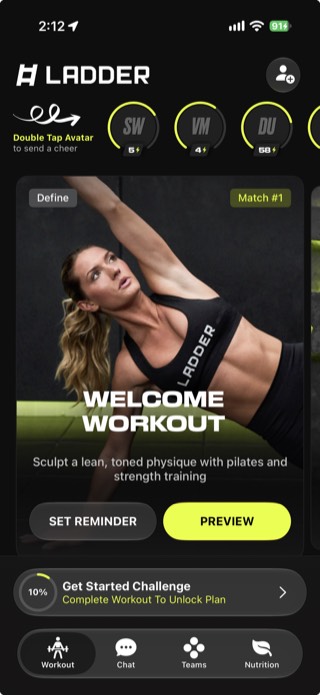
Ladder assigns you a weekly program set by a coach, delivered as follow-along videos you swipe through set by set. The free trial does not start immediately: you first complete a "welcome" preview workout, and only then does the 7-day clock begin.
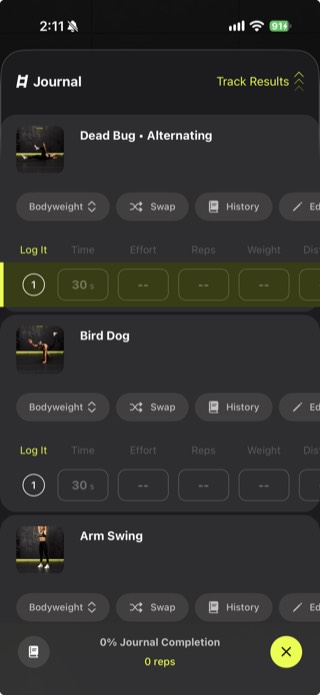
Tracking your weights and reps is optional, not required. Each exercise has fields for time, effort, reps, and weight that you can fill in or leave blank, and leaving them blank does not stop the workout. That means progressive overload only happens if you log your numbers yourself; skip that and Ladder is effectively a follow-along video app. There is also no way to adjust the program for fatigue, joint sensitivity, or a lower-energy day common in perimenopause: the coach sets the week, and you either do it as written or skip it.
Best for: Women who want a structured, coach-designed
weekly program and do not mind logging their own numbers to get real
progressive overload out of it.
Price: $16.99/month or $99.99/year, after a 7-day
trial that starts once you finish the preview workout.
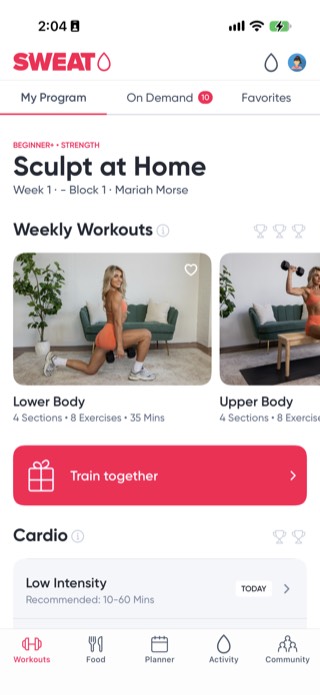
5. Sweat: best for trainer-led gym programs with variety
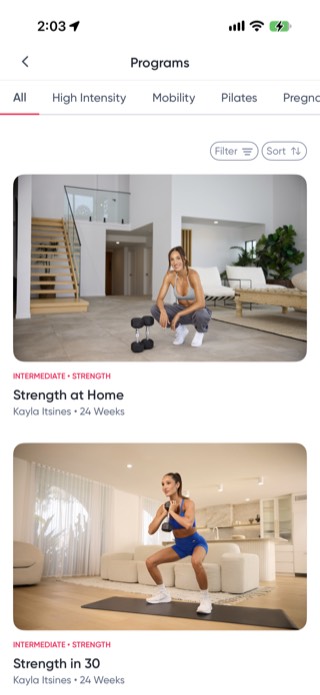
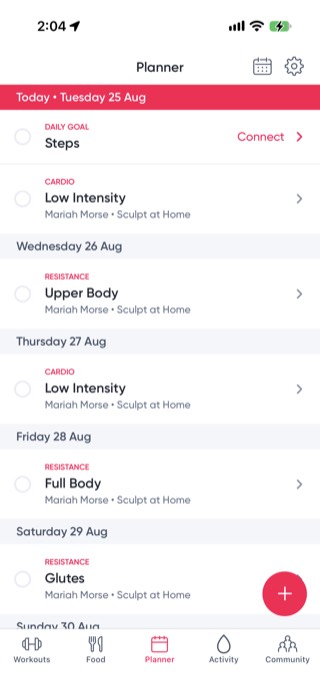
Sweat offers a library of gym-based strength programs led by different trainers, including High-Intensity Strength and BUILD, alongside cardio, yoga, and Pilates options if you want to mix training styles across the week. The in-app program browser filters by category, including High Intensity, Mobility, Pilates, and Pregnancy, but we could not find a perimenopause or menopause category, program, or workout anywhere in the app.
Like most general fitness apps, Sweat is not built specifically for perimenopause. None of its programs account for recovery variability or joint sensitivity by default, so you would need to select conservatively and adjust volume yourself on lower-energy weeks.
Best for: Women who want variety across trainer-led gym
programs rather than one fixed plan.
Price: $19.99/month or $119/year, after a 7-day trial.
Best gym app for women over 40: what changes the answer
The best gym app for women over 40 is not always the same as the best app for women in perimenopause specifically. Women over 40 who are not experiencing perimenopause symptoms may do well with any solid progressive strength app. Women in perimenopause benefit most from apps that account for recovery variability and joint sensitivity.
If you are 40+ and primarily want structured strength with a clear plan, StrongEra is the strongest fit. If you are an experienced lifter who wants to run a specific barbell program, StrengthLog or Hevy give you the tools without paying for features you will not use.
For bone health specifically, which becomes more relevant around menopause, see our guide to the best apps for tracking bone health during perimenopause, or our list of the 10 best strength training apps for bone health. If you are past perimenopause and looking specifically for menopause-focused apps, see best strength training apps for menopause.
How to choose the right app for your routine
If you want to lift two or three days per week, pick a plan that makes those sessions full body and repeatable. If you can train four days, look for an upper and lower split with manageable workout length.
Prioritize clarity over complexity. A plan you can follow for six months beats a sophisticated program you abandon after three weeks. If the app makes it hard to adjust a session on a low-energy day, it is not the right fit for perimenopause training.
For more help narrowing it down, read our guide to how to choose a strength training app for women over 40.
Takeaway
The best gym app for perimenopause is one that builds strength progressively, respects recovery, and gives you a clear plan for every session. StrongEra is the strongest choice for women in midlife who want structured gym training built around their specific needs. StrengthLog and Hevy are solid free alternatives if you already know what program you want to run.
Frequently asked questions
What is the best exercise app for perimenopause?
StrongEra is the best exercise app for perimenopause for most women, since it is built specifically for midlife strength training with progressive plans and joint-friendly options. StrengthLog and Hevy are solid free alternatives for a general lifting log.
What should a perimenopause gym workout app include?
Look for progressive strength plans, clear setup cues, realistic session length, recovery flexibility, and exercise alternatives for days when joints or energy feel different.
Is a gym app better than a class app during perimenopause?
It depends on what keeps you consistent. A gym app is usually a better fit if your main goal is structured strength progress, while class apps can help if guided variety keeps you moving.
Can StrongEra be used in a gym?
Yes. StrongEra supports strength training for home or gym routines, with clear structure and options for women in midlife and beyond.
How many days a week should women in perimenopause strength train?
Two to four sessions per week is a well-supported range. This allows enough training stimulus to build strength and support bone density without outpacing recovery, which can be less predictable during perimenopause.
Are gym apps safe for women with joint pain during perimenopause?
Many gym apps include exercise alternatives for sensitive joints. Look for apps that let you swap movements or reduce range of motion without abandoning the plan entirely. StrongEra, StrengthLog, and Hevy all allow exercise substitutions.