Why strength training in perimenopause matters: the receipts
If you found this from @freshoutoffks reel, you already know the pitch: lift heavy, protect your bones, keep your muscle, take the edge off your perimenopausal symptoms. Our algorithm has been screaming at us about the importance of lifting weights for years now, but if you are like us and you need convincing, not instruction, you've probably found those same reels rarely show you WHY lifting matters for women over 40.
In this post, we'll share the actual science behind the claims: three separate trials, three different outcomes, and zero vague "just move more" advice! Full citations are at the end of the post.
Your bones
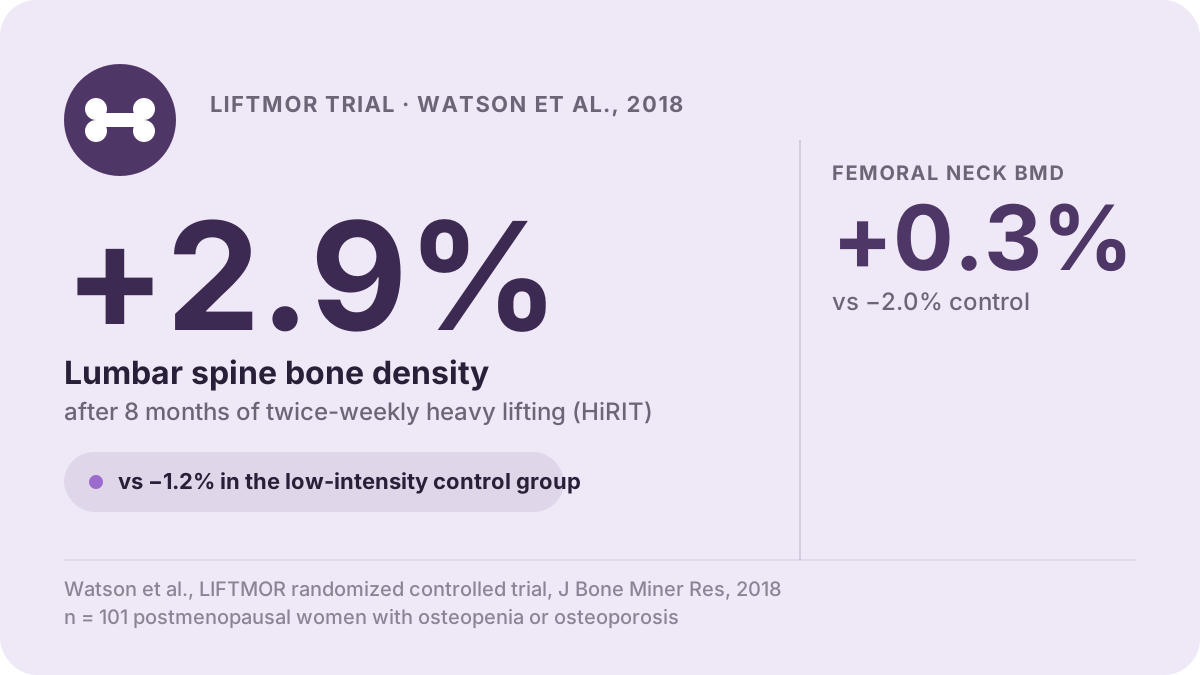
The strongest evidence here comes from the LIFTMOR trial. Postmenopausal women with osteopenia or osteoporosis did twice-weekly high-intensity resistance and impact training for eight months — deadlifts, overhead presses, jumping chin-ups and back squats, loaded heavy, not light.
The results: lumbar spine bone density rose 2.9% in the training group, while the low-intensity control group lost 1.2% over the same period. Femoral neck density rose slightly (0.3%) against a 2.0% loss in the control group.
This is the trial most "heavy lifting for bone density" advice traces back to — and it's the reason clinical guidance for osteoporosis and osteopenia has shifted from "be gentle" to "lift heavy, safely."
Your muscle
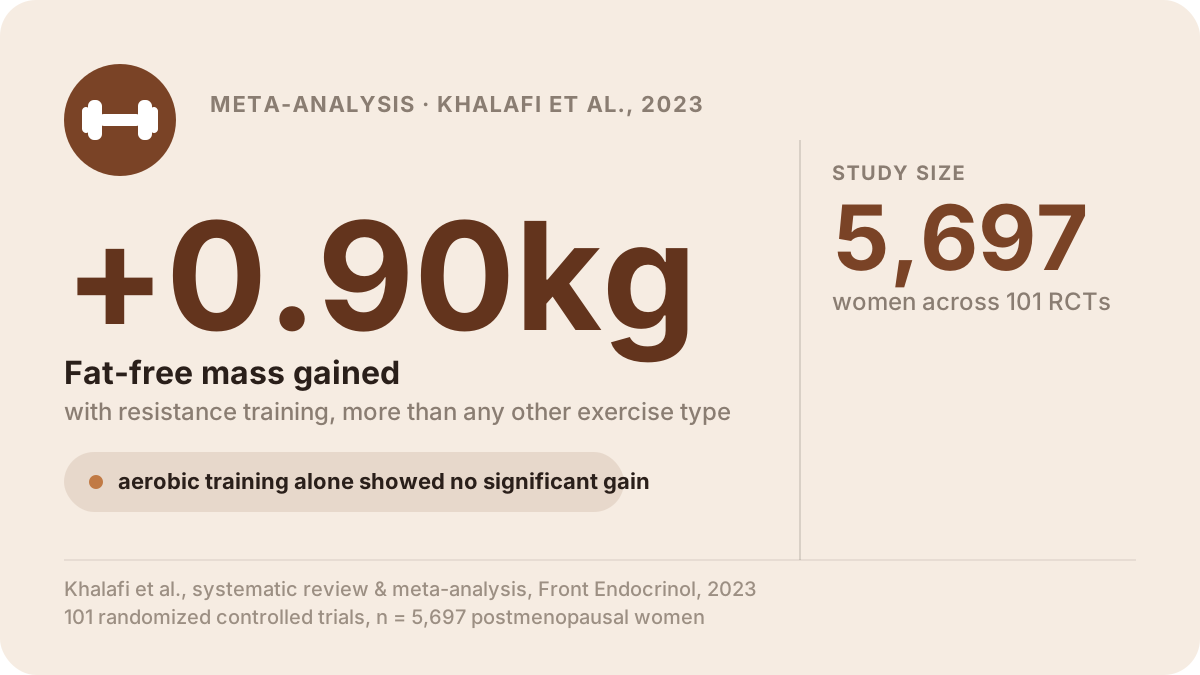
The proof that lifting weights helps you keep your lean muscle comes from a meta-analysis rather than a single trial, which makes it more reliable on its own. Khalafi et al.'s 2023 study pulled data from 101 randomised controlled trials pooling 5,697 postmenopausal women.
Resistance training increased fat-free mass by an average of 0.90kg — more than aerobic or combined training managed. It's the clearest evidence we have that lifting, specifically, is what preserves and rebuilds muscle through menopause. Cardio helps with fat loss. It doesn't do this.
Worth knowing: some individual trials in the analysis found postmenopausal women need a higher training volume than premenopausal women to see the same muscle gains, which is partly why "just move more" undersells what's actually needed here.
Your symptoms
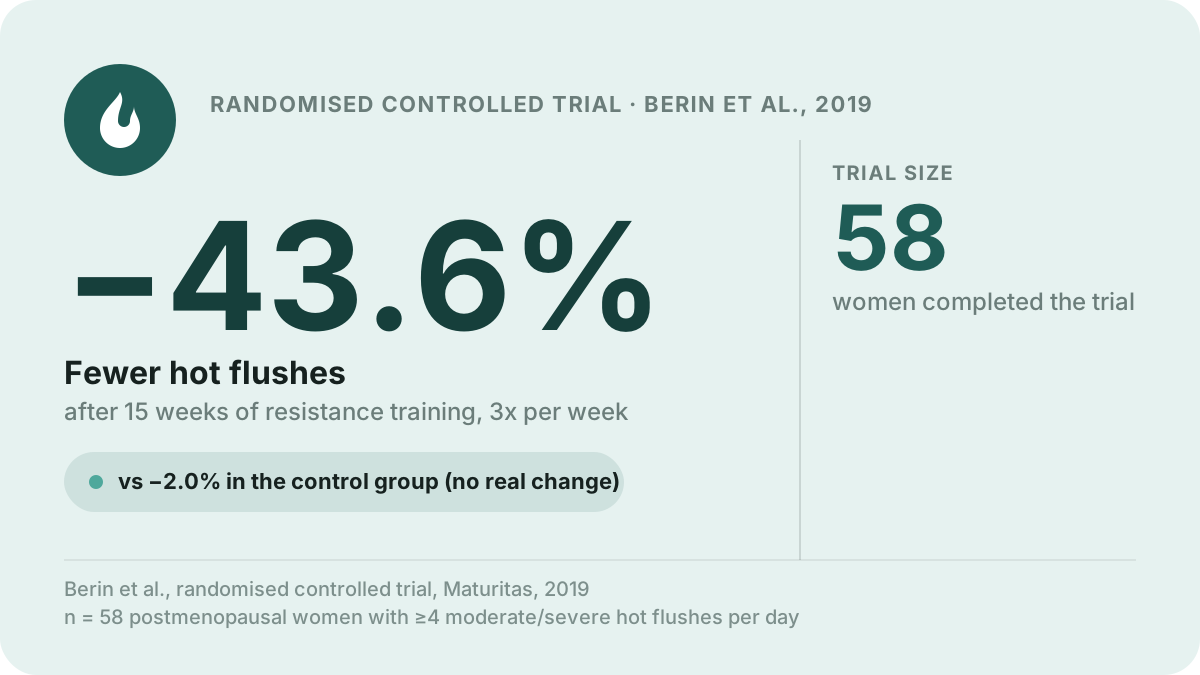
Fifty-eight postmenopausal women took part in a 2019 study by Berin et al., all having four or more moderate-to-severe hot flushes or night sweats a day, none doing regular exercise beforehand. Half did resistance training three times a week for 15 weeks. Half didn't.
The training group's hot flush frequency dropped 43.6%. The control group's dropped 2.0% — close enough to no change. The difference held even though nobody in the trial was told to change anything else, diet included.
The bottom line
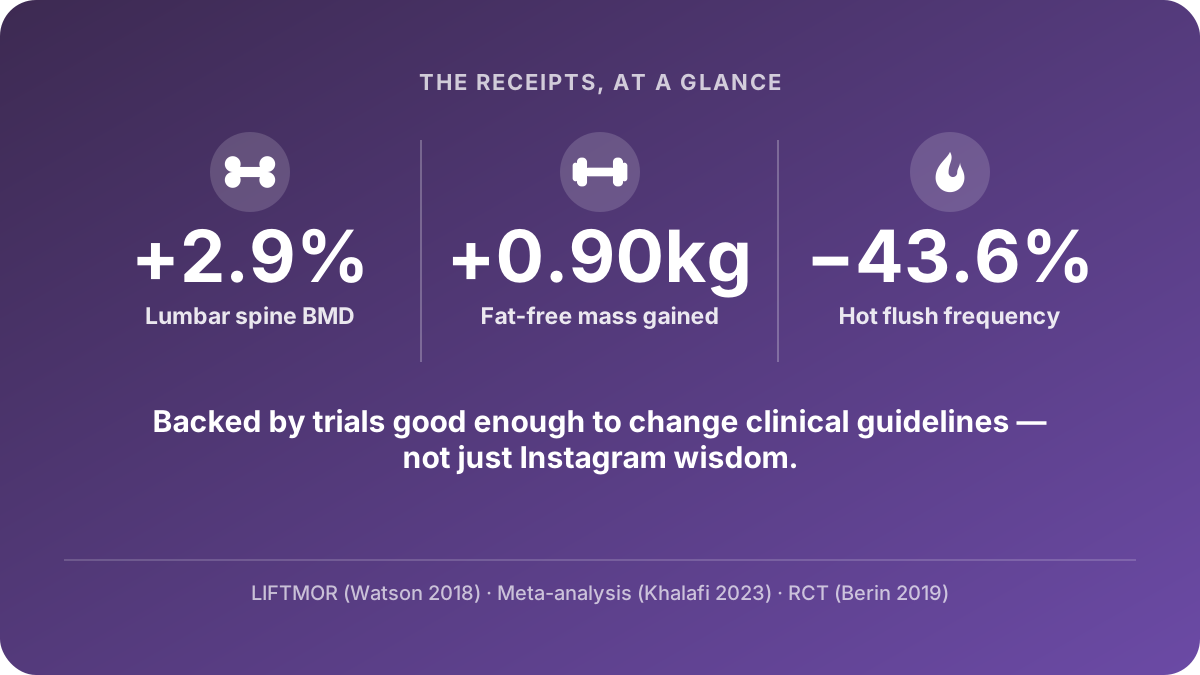
Three separate bodies of research, three different outcomes, one intervention. Heavy, progressive strength training is doing more for your bones, your muscle and your symptoms than almost anything else on offer right now, and it's backed by trials good enough to change clinical guidelines, not just Instagram wisdom.
That's what StrongEra is built around — with a free 7-day trial to start.
If you're interested in more resources for bone health, muscle health, strength training, perimenopause and menopause, head to the Resources page.
References
- Watson SL, Weeks BK, Weis LJ, Harding AT, Horan SA, Beck BR. High-Intensity Resistance and Impact Training Improves Bone Mineral Density and Physical Function in Postmenopausal Women With Osteopenia and Osteoporosis: The LIFTMOR Randomized Controlled Trial. J Bone Miner Res. 2018;33(2):211-220. PMID: 28975661
- Khalafi M, Habibi Maleki A, Sakhaei MH, Rosenkranz SK, Pourvaghar MJ, Ehsanifar M, Bayat H, Korivi M, Liu Y. The effects of exercise training on body composition in postmenopausal women: a systematic review and meta-analysis. Front Endocrinol. 2023. PMID: 37388207
- Berin E, Hammar M, Lindblom H, Lindh-Åstrand L, Rubér M, Spetz Holm AC. Resistance training for hot flushes in postmenopausal women: A randomised controlled trial. Maturitas. 2019;126:55-60. PMID: 31239119
Sourcing note: all three citations above, including full author lists, were verified against Europe PMC and PMC records directly, not carried over from the reel or from secondary summaries. Percentages are as reported in each paper's results, not recalculated.
Please note: StrongEra content is for general educational purposes only. It is not medical advice. Please consult a qualified healthcare professional for guidance specific to your needs.