Best workout app for perimenopausal women (2026)
The best workout app for perimenopausal women is one that helps you build strength consistently, adjust to changing energy, and make progress without feeling wrecked after every session.
Reviewed by Claire McGregor, Fortify co-founder. After being diagnosed with osteoporosis at 41, Claire and co-founder Stuart Hall put hundreds of hours into researching the most effective ways for women to train through perimenopause for bone density, hormonal change, and metabolic health, and Fortify's programming is built on that research. She evaluates every app on this list against it, not a generic fitness checklist.
Quick answer
Fortify is the best workout app for perimenopausal women who want a clear strength plan, realistic workout length, and coaching built for women 40+. If your priority is getting stronger without burning out, it is the most focused option in this category. If you prefer a general workout library or simple lifting log, there are other good picks below.
If you are searching for a perimenopause workout app, focus on structure first: strength progression, recovery flexibility, and workouts that fit normal weeks. If your search is more age based, read our guide to the best workout app for women over 40. If you are past perimenopause and in menopause, see best strength training apps for menopause.
How we evaluated these apps
We compared these apps against their current App Store listings, published pricing, and program structure, cross-checked against what actually matters for training through perimenopause: whether load progresses over time instead of resetting every week, realistic session length, joint-friendly exercise swaps, and whether the app is built for this life stage specifically or adapted from a general fitness audience. Fortify's programming is built on hundreds of hours of research Claire and co-founder Stuart put into training through perimenopause, not a demographic filter applied to a generic plan.
How we picked the best workout apps
Perimenopause can affect recovery, sleep, joint comfort, and day to day energy. That shifts what makes a workout app genuinely useful. We favored apps that support steady strength progress, keep session length realistic, and make it easy to stay consistent when life and energy are not perfect.
We also looked for clear coaching, repeatable programming, and enough flexibility for home or gym training. A huge class library can be useful, but for this search intent it is usually less valuable than having a plan that clearly tells you what to do this week and how to progress next week.
In plain terms, the best workout app for perimenopausal women is usually not the one with the most classes. It is the one that helps you keep showing up and getting stronger.
If your main decision is gym training versus general workouts, compare this with our guide to the best gym apps for women in perimenopause.
Best workout apps for perimenopausal women
If your main goal is to build strength, protect muscle, and stay consistent, these are the most relevant options to compare.
1. Fortify - best overall for women 40+
Fortify is built specifically for women in perimenopause, menopause, and beyond. It focuses on progressive strength training with realistic workout structure, clear exercise guidance, and joint friendly options that help you keep training even when energy is not perfect.
It is the strongest fit if you want a plan that feels targeted rather than generic. Instead of chasing calorie burn, Fortify centers on muscle, strength, and sustainable progression. That makes it a better match for this search than apps built mainly around random classes or general fitness.
Best for: women who want a structured app that feels made for midlife, not a generic workout library.
2. StrengthLog - best for detailed lifting plans
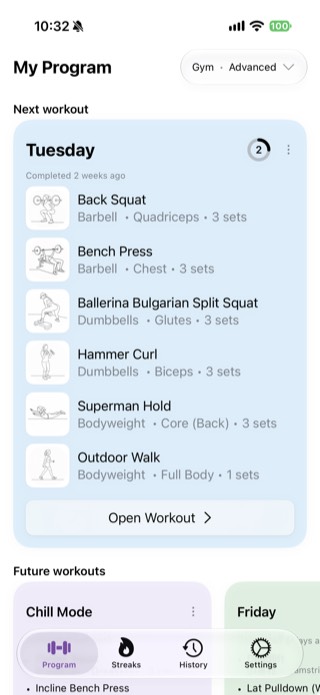
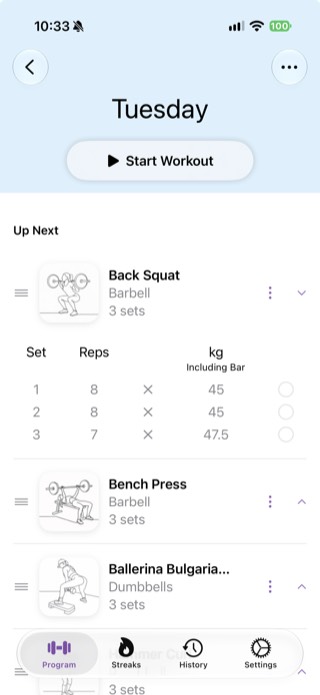
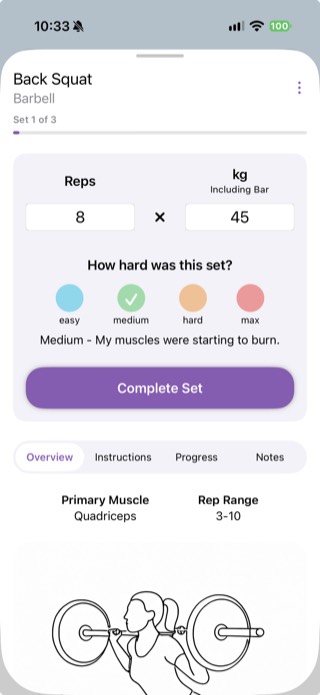
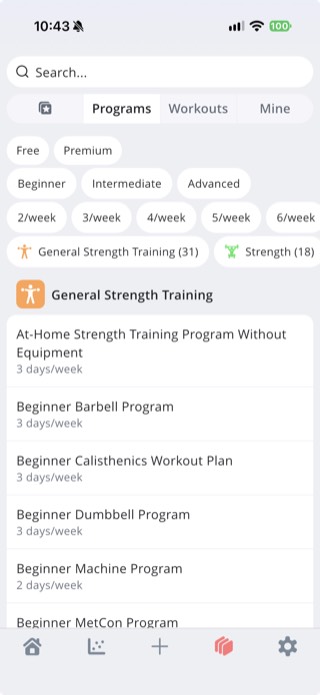
StrengthLog is a solid option if you want a large program library and detailed workout tracking. The free tier covers unlimited logging, over 450 exercises with demonstrations, and built-in 1RM and warm-up calculators, so it suits women who already know they want to follow a strength plan and do not mind a more traditional lifting feel.
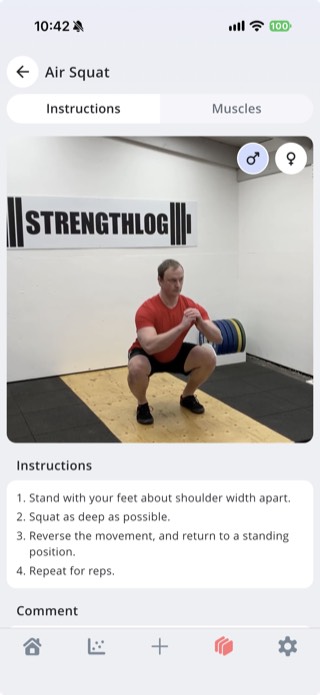
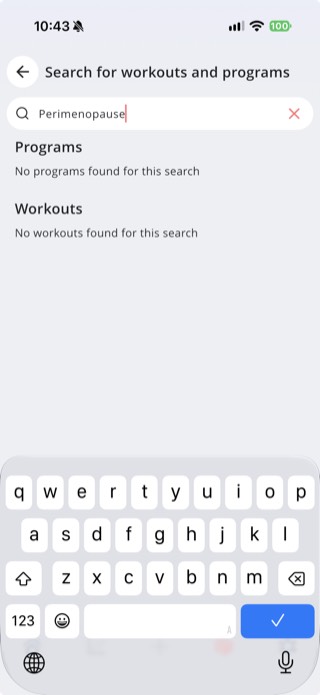
Signing up for a free account is mandatory before you can do anything else, and there is no onboarding or quiz to point you toward a program, so you land straight on a home screen and need to already know what you are looking for. Searching "perimenopause" inside the app returns zero programs and zero workouts. Exercise demo videos are included throughout, but every one we checked used a male model, and the written instructions are generic rather than written for female anatomy. We also did not find a way to swap out an exercise, which matters if you are working around an injury.
Best for: experienced lifters who want more tracking depth and are happy
with a less perimenopause specific experience.
Price: Free core app with unlimited logging; Premium
unlocks the full 200+ program catalog after a 2-week free trial. The
trial defaults into the "most popular" 3-month plan (about $40 total,
roughly $13/month) unless you switch to monthly (about $18) or annual
(about $115) instead.
3. Hevy - best for simple workout logging
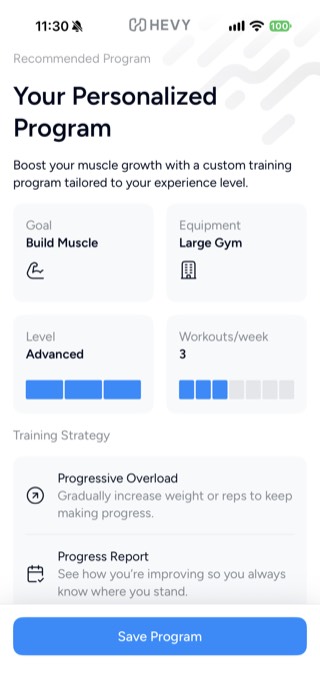
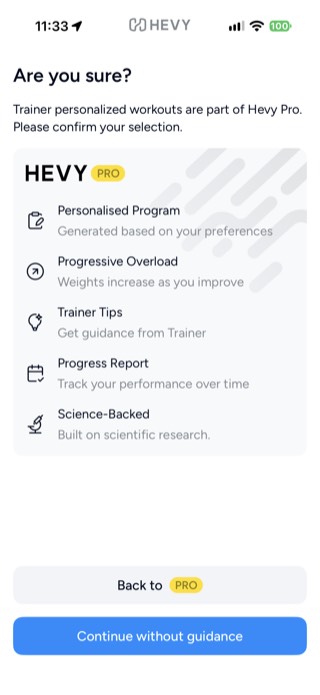
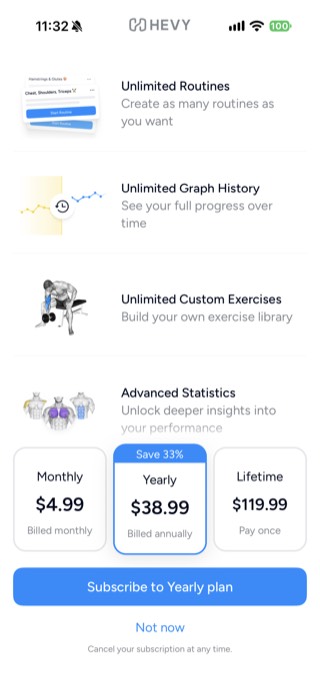
Hevy's onboarding runs close to 20 screens before you reach the paywall, asking for age, weight, gender, and training experience along the way. Based on real inputs (46, female, 3+ years of training experience), it generated a program built around progressive overload, three workouts a week, at an advanced level. Hitting "Save Program" is what actually triggers the paywall, not any point earlier in the flow.
The free tier does not include that generated program: it only lets you build a routine from scratch, with no progressive overload built in and no way to see progress over time. There is no free trial for Pro either, so you need to subscribe or buy the lifetime option before you can save the program Hevy just built for you.
Best for: women who already know how they want to train and mainly need a
fast, simple logbook.
Price: Free tier lets you build your own routines with
no progress tracking; Pro is $2.99/month, $23.99/year, or $74.99
lifetime, with no free trial on any plan.
4. Nike Training Club - best for variety
Nike Training Club offers a lot of guided sessions and variety. It can be a good pick if you enjoy follow along workouts, though it is less focused on long term progressive strength than Fortify.
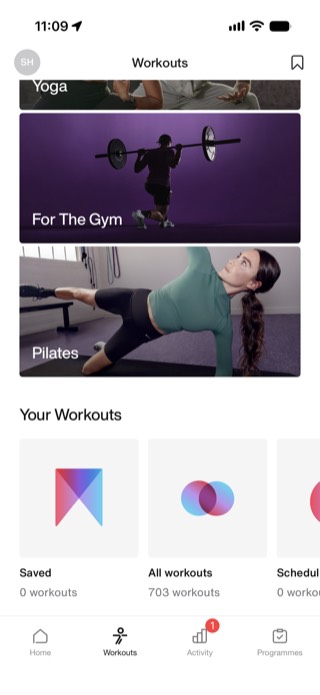
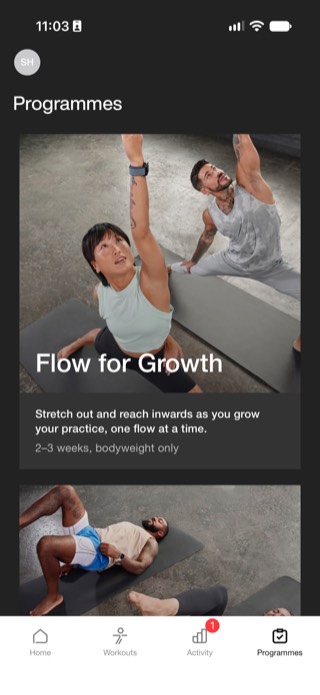
The library is huge (703 workouts across categories like gym, yoga, and Pilates), which cuts both ways: plenty of choice, but no onboarding or quiz to help you find a starting point. Searching "perimenopause" inside the app returns no results. Some sessions are led by female instructors, though none of the programmes we saw were built around a specific life stage.
Best for: women who stay motivated with variety and guided sessions more
than structured strength blocks.
Price: Free.

5. Caliber - best for 1-on-1 video coaching
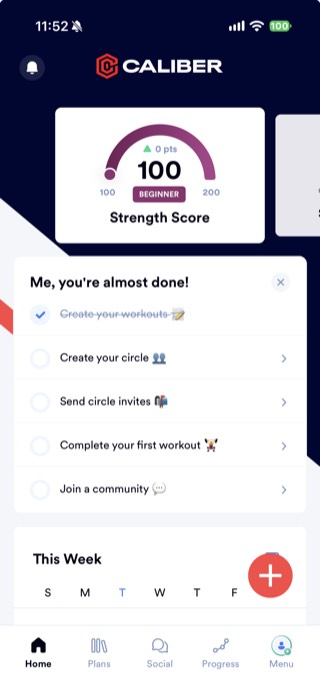
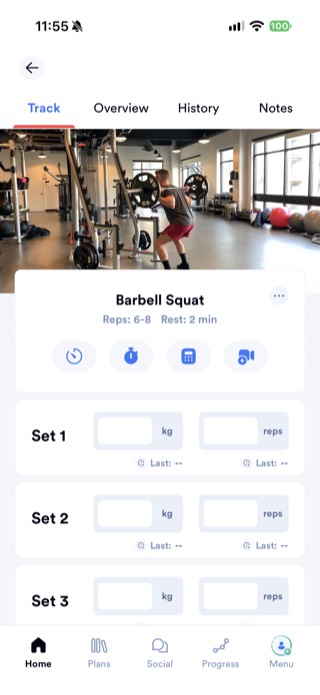
Caliber's onboarding runs 17 screens before you can even create an account, collecting your height, weight, and birthdate along the way. The goal options are gender- and age-agnostic, so there is nothing perimenopause-specific to select, and training frequency is fixed at 4 or 5 days a week, more than some women in perimenopause may want while managing variable recovery. You can train at home or in a gym, and the default program uses a body-part split with video demos for each exercise.
Once you reach the home screen, a checklist sits above your first workout prompting you to create your circle, send invites, and join a community, steps that look more useful to Caliber's growth than to someone trying the app for the first time. Coaching itself is genuine 1-on-1 video calls with a trainer, available on the Caliber Plus tier.
Best for: women who want real 1-on-1 coaching and do not mind a longer
onboarding and a fixed 4-5 day schedule.
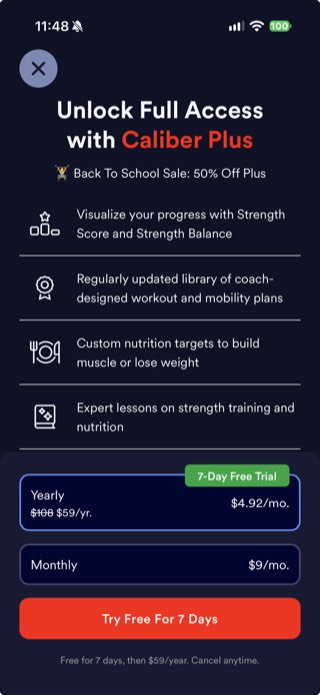
Price: Caliber Plus is $9/month, or $108/year (about
$9/month) with a 7-day trial; the monthly plan has no trial.
Why strength training usually matters most in perimenopause
A lot of women searching this term are really trying to solve a practical problem: which workouts are worth prioritizing when your body feels less predictable than it used to. In many cases, strength training is the highest value place to start because it helps you work on muscle, confidence, and long term function in a measurable way.
That does not mean every workout needs to be heavy or intense. It means your app should help you progress sensibly. Consistency usually beats intensity spikes, especially if sleep, stress, or recovery vary from week to week.
Nutrition plays a role too, especially getting enough fiber to support digestion and steady energy levels. If that's a gap in your routine, see our guide to the best fiber tracker app for iPhone.
If you want a gym specific comparison, read best gym apps for women in perimenopause. If you are still weighing your options, see how to choose a strength training app for women over 40. If your search is more age based than hormone-stage based, read best workout app for women over 40.
Takeaway
The best workout app for perimenopausal women is the one that makes training feel clear, doable, and sustainable. Fortify is the strongest overall pick if you want a workout plan designed for women 40+, while StrengthLog, Hevy, Nike Training Club, and Caliber can make sense depending on whether you want deeper tracking, more variety, or real 1-on-1 coaching.
Please note: Fortify content is for general educational purposes only. It is not medical advice. Please consult a qualified healthcare professional for guidance specific to your needs.
Related posts
Frequently asked questions
What is the best type of workout app for perimenopause?
For many women, the best fit is a strength training app with clear progression, realistic workout length, and enough flexibility to handle changing energy and recovery from week to week.
Is strength training a better choice than random cardio classes during perimenopause?
It depends on your goals, but many women find that structured strength training is more useful for building muscle, supporting bone health, and creating steady progress than relying only on random high intensity classes.
How often should perimenopausal women work out?
A sustainable routine often matters more than doing the maximum. For many women, two to four focused workouts per week is more realistic and easier to maintain than trying to train hard every day.