
Best protein tracker app for iPhone (2026): 5 tested, ranked by speed
The best protein tracker app should make logging feel quick, keep your target visible, and fit normal meals without turning every day into admin.
We compared the top iPhone options for logging speed, protein visibility, and how easy each one is to keep using when life gets busy.
Reviewed by Stuart Hall, Proto co-founder. Stuart and co-founder Claire McGregor have both tracked protein for years while strength training several times a week, and built Proto after running into the same two problems with every other macro tracker: logging that took too long, and calorie-first goals that buried the number they actually cared about. He evaluates every app on this list against that same standard for protein-first tracking, not a generic calorie-counting checklist.
Quick answer
If protein is the main goal, the best protein tracker app is the one that keeps protein front and center and makes repeat logging easy. For most people, that means fast meal capture, clear progress, and fewer steps.
- Proto: best for fast logging and protein-first visibility.
- Cronometer: best for deeper nutrition detail.
- MyFitnessPal: best for a large food database.
- MacroFactor: best for adaptive calorie targets based on real data.
- Lose It!: best for lighter calorie tracking.
| App | Best fit | Price |
|---|---|---|
| Proto | Fast protein first tracking | Free trial, subscription |
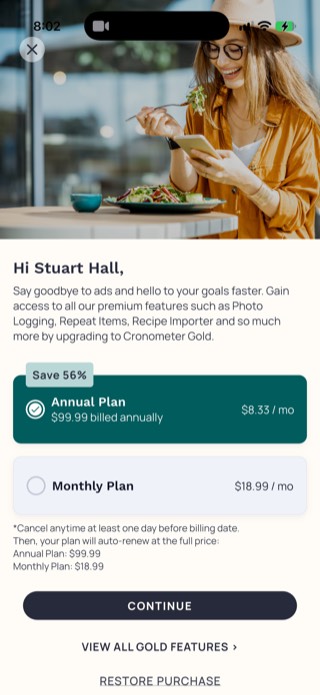
| Cronometer | Detailed nutrition data | Free tier with ads; Gold $10.99/mo or $59.99/yr |
| MyFitnessPal | Large food database | Free tier with ads; $19.99/mo or $79.99/yr |
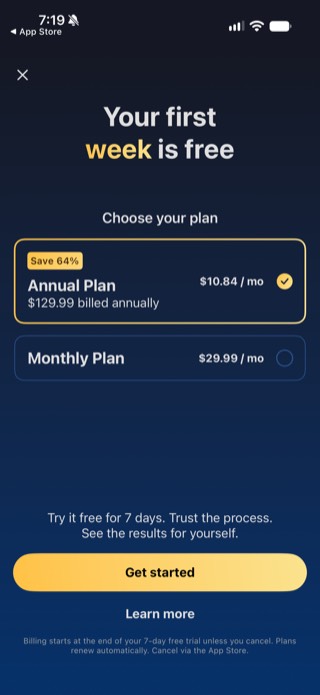
| MacroFactor | Adaptive calorie targets based on real data | No free tier; $11.99/mo or $71.99/yr (about $6/mo), after a 7-day trial |
| Lose It! | Simple calorie tracking | Free tier; Premium $79.99/yr only, no monthly plan |
How we evaluated these apps
We compared these apps against their current App Store listings, published pricing, and actual logging flow, cross-checked against what matters most for protein-first tracking: how many steps it takes to log a meal, whether the number you care about is visible without digging into a secondary tab, and whether the app is built around that number as the priority or treats it as an afterthought to calories. Proto was built to fix the two problems Stuart and Claire kept running into with existing trackers: logging slow enough that it stopped being a daily habit, and calorie-first goals that buried protein.
If you want a tracker that also keeps fiber visible, read our guide to the best protein and fiber tracker app.
Best protein tracker apps for iPhone
We looked at speed of logging, protein accuracy, habit-building features, and whether the app stays out of your way. Here is the short list, ordered by how quickly we could log a full day while keeping protein front and center.
1. Proto: best overall
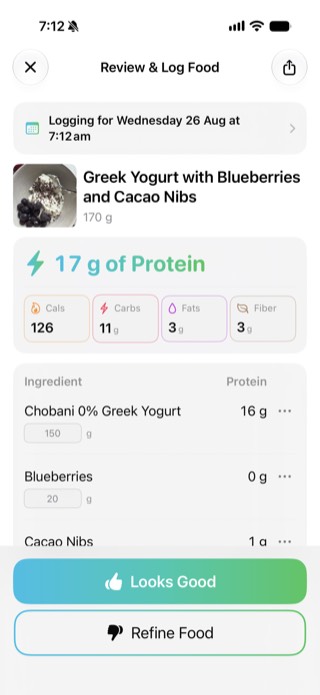
Photo-based logging reviews a per-ingredient protein breakdown with editable gram amounts before it saves, rather than a single estimate you cannot check. Recent and saved meals relog in one tap, so repeat meals do not mean repeating the whole capture step.
- Per-ingredient photo breakdown you confirm or correct.
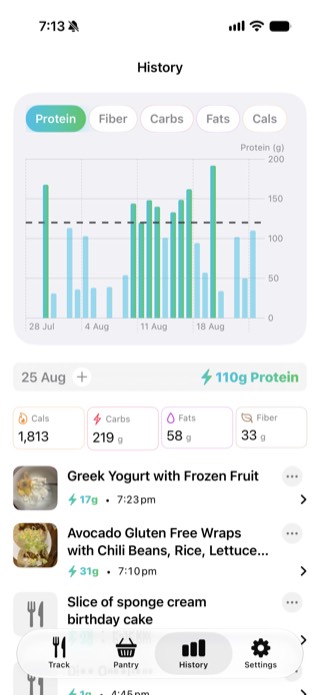
- Saved meals relog in one tap.
- Protein and fiber stay visible as the headline goals.

2. Cronometer
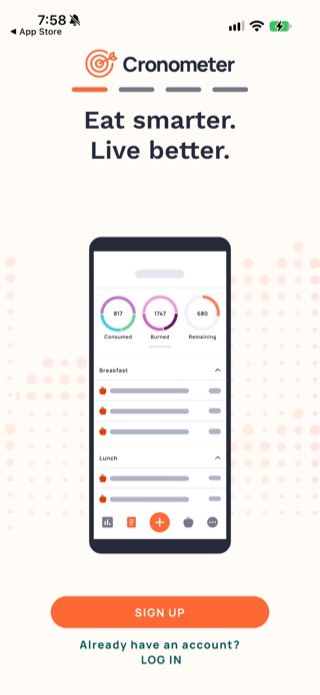
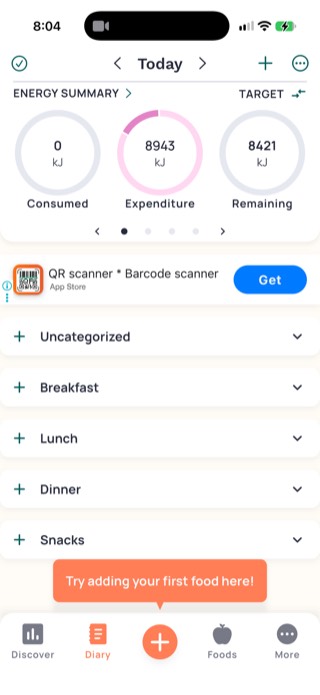
A full micronutrient breakdown alongside calories and protein, but the interface is heavier if you just want protein. The free tier carries a banner ad, and the Diary defaulted to kilojoules rather than calories for us.
- Pros: deep nutrient data and barcode scanning.
- Cons: multi-step logging, ads on the free tier, and a weaker protein-first flow.
3. MyFitnessPal
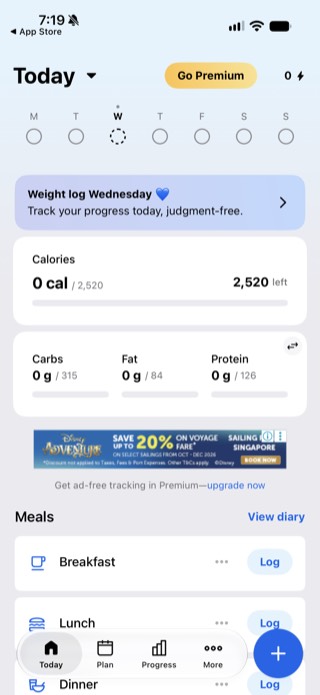
Huge food database, but the free tier carries ads. Protein is not hidden away, though: it sits in a Carbs, Fat, and Protein row directly on the main Today screen, not buried behind a separate tab.
- Pros: massive library and protein visible on the main screen.
- Cons: ads on the free tier and a calorie-led layout overall.
4. MacroFactor: best for adaptive calorie targets
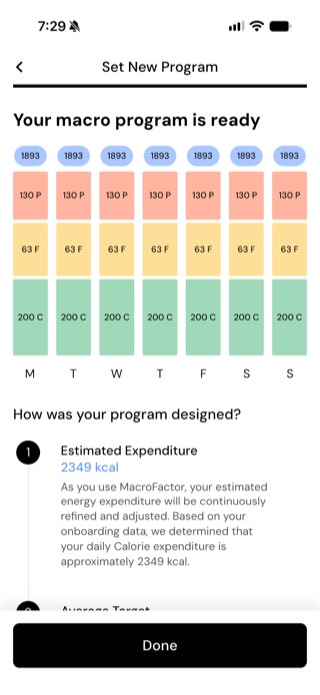
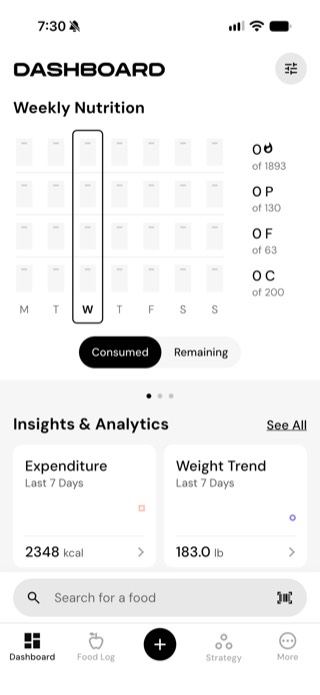
Onboarding ends with a full week of daily targets already set for calories, protein, fat, and carbs, based on an initial expenditure estimate. MacroFactor is upfront that this is a starting point: it states your estimated energy expenditure "will be continuously refined and adjusted" as you log real data against it. The dashboard keeps protein visible as part of a weekly macro grid rather than a single day's snapshot, with rolling insight cards for expenditure and weight trend alongside it.
- Pros: protein tracked as part of an adaptive, data-driven target rather than a fixed guess.
- Cons: no free tier, and the macro-forward interface takes more setup than a simple logger.
5. Lose It!
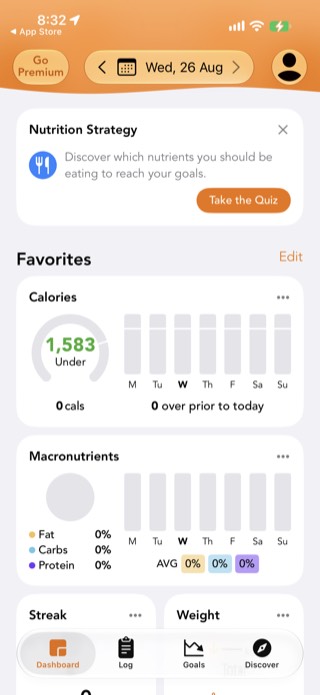
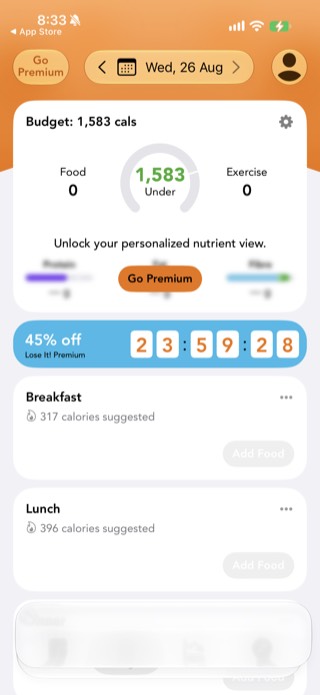
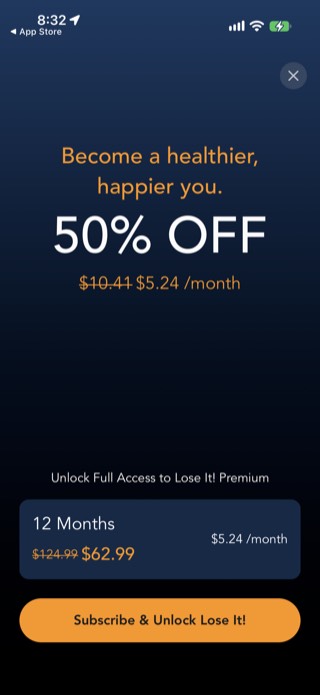
Protein appears as a simple percentage on the free Dashboard alongside fat and carbs. A more detailed personalized nutrient view is blurred behind Premium while logging, and the app frequently promotes a discount on its one annual plan.
- Pros: protein visible as a percentage on the free Dashboard.
- Cons: detailed nutrient breakdown is Premium-only, and there is no monthly plan, only annual.
Takeaway
The best protein tracker app is the one that makes logging quick, keeps protein visible, and fits your normal routine. If you want the fastest protein-first workflow on iPhone, Proto is the strongest fit in this group.
Please note: Proto does not provide medical or dietary advice. Always consult a qualified healthcare professional to determine appropriate protein intake for your needs.
If you also want satiety support in the same workflow, compare it with our guide to the best protein and fiber tracker app.
Frequently asked questions
What is the best protein tracker app for iPhone?
Proto is the best protein tracker app for iPhone for a fast, protein-first workflow. Photo-based logging gives you a per-ingredient protein breakdown, and saved meals relog in one tap.
What is the best app to track protein quickly?
For a protein first workflow, look for fast meal capture, saved meals, and a daily protein target that stays visible. Proto is built around that simpler protein first flow on iPhone.
Is a protein tracker app better than a calorie tracker?
It depends on your goal. A protein tracker is usually simpler if protein is the main number you care about, while a calorie tracker can make sense if you want broader food logging.
Can I track protein and fiber in one app?
Yes. Some apps show both. Proto keeps protein and fiber visible together while still letting you see calories, carbs, and fat in the background.
Is a protein tracker app different from a calorie or macro tracking app?
A protein tracker keeps protein as the headline number, while calorie and macro trackers like MyFitnessPal or Cronometer lead with a full nutrition breakdown. Proto still logs calories, carbs, and fat, it just keeps protein visible first.