
5 best MyFitnessPal alternatives for protein tracking (2026)
MyFitnessPal is the most recognised food tracker, but it was built around calories first. If protein is your main goal, the calorie-first interface can feel like friction every time you open it.
We compared the strongest alternatives on logging speed, protein visibility, and how easy each app is to keep using week after week.
Reviewed by Stuart Hall, Proto co-founder. Stuart and co-founder Claire McGregor have both tracked protein for years while strength training several times a week, and built Proto after running into the same two problems with every other macro tracker: logging that took too long, and calorie-first goals that buried the number they actually cared about. He evaluates every app on this list against that same standard for tracking protein instead of just calories, not a generic calorie-counting checklist.
Quick answer
Proto is the strongest alternative if protein is your primary target: it is built around a protein-first workflow from the ground up. Cronometer is better for detailed nutrition data without ads. MacroFactor suits people who want adaptive calorie targets. MyNetDiary is a clean middle ground for calorie and macro tracking. Lose It! is the simplest starting point for new trackers.
Comparison at a glance
| App | Best for | Protein visibility | Price |
|---|---|---|---|
| Proto | Protein-first logging | Front and center | Free trial, subscription |
| Cronometer | Detailed nutrition data | Good, requires setup | Free tier with ads; Gold $10.99/mo or $59.99/yr |
| MacroFactor | Adaptive calorie targets | Good, macro-forward UI | No free tier; $11.99/mo or $71.99/yr, after a 7-day trial |
| MyNetDiary | Calorie and macro tracking with an AI coach upsell | Visible, not prominent | Free tier; Premium $8.99/mo or $59.99/yr |
| Lose It! | Simple entry point | Available, not prominent | Free tier; Premium $79.99/yr only, no monthly plan |
Why people switch from MyFitnessPal
MyFitnessPal has one of the largest food databases of any tracker app, and for many years it was the default choice. The reasons people look for alternatives tend to cluster around a few recurring issues.
The interface is calorie-first: calories are the headline number on the dashboard. Protein is not hidden away, though. It sits in a Carbs, Fat, and Protein row directly on the main Today screen, not behind a separate tab. For people who want protein as the headline number rather than a row underneath calories, that layout is still the main reason to look elsewhere.
The free tier includes ads, one of which sits in the middle of the Today screen itself, and Premium has become more expensive over time. Many of the most useful features are locked behind the paid plan.
Database accuracy is also a common complaint. Because many entries are user-submitted, duplicates and nutritional errors appear regularly, which can undermine confidence in the numbers.
5 best MyFitnessPal alternatives for protein tracking
1. Proto: best for protein-first tracking
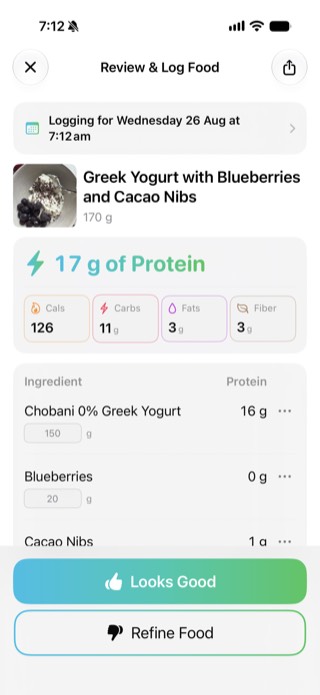
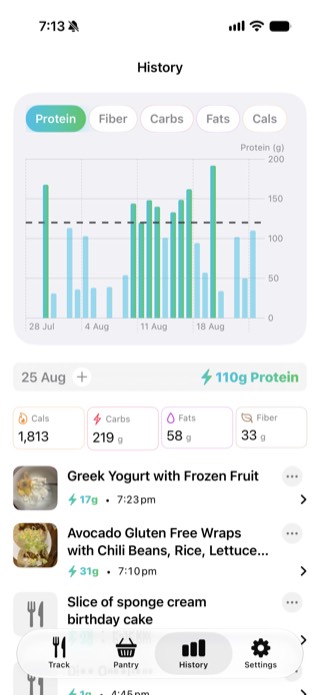
Proto is built around a protein-first workflow: protein is the headline number on the dashboard, not a row underneath calories. Photo-based logging reviews a per-ingredient protein breakdown with editable gram amounts before it saves, rather than a single number you cannot check, and saved meals relog in one tap.
The interface is deliberately simpler than MyFitnessPal. There are no social feeds, premium upsell banners, or calorie-first charts. If protein is your main goal and you want a clean, fast daily routine, Proto removes the noise that makes MyFitnessPal feel heavy.
Fiber is also tracked alongside protein, which helps with satiety, useful if you are managing both muscle support and body composition. Read more in our guide to the best protein and fiber tracker app.
Best for: People who want protein front and center with a
faster, simpler daily logging routine than MyFitnessPal.
Price: Free trial, then subscription.

2. Cronometer: best for detailed nutrition data
Cronometer's food database is curated rather than user-submitted, which gives it an accuracy advantage over MyFitnessPal for many entries. Alongside calories and protein, it tracks a full micronutrient breakdown: vitamins, minerals, and amino acids. That makes it the strongest choice if you want rigorous nutrition data.
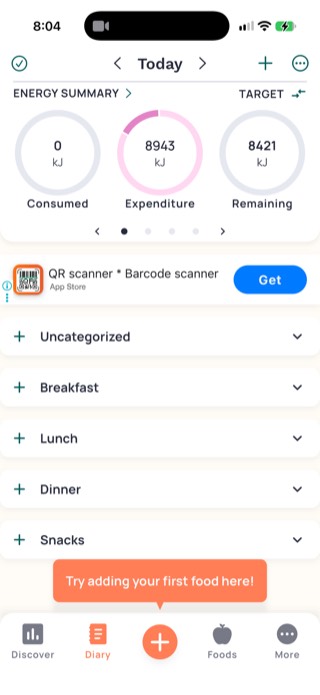
The free tier is not ad-free, though: a banner ad for an unrelated app sits in the middle of the Diary view, and the Diary defaulted to kilojoules rather than calories for us. The interface is also denser and the logging flow slower than MyFitnessPal: it is built for precision rather than speed. Protein is trackable but not the headline metric; you will need to configure the dashboard to keep it visible.
Best for: People who want a more accurate food database
and deeper nutrition data without switching to a paid plan immediately.
Price: Free tier with ads; Gold is $10.99/month or
$59.99/year.


3. MacroFactor: best for adaptive calorie targets
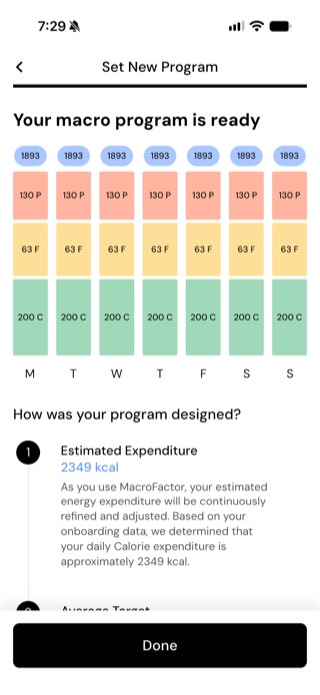
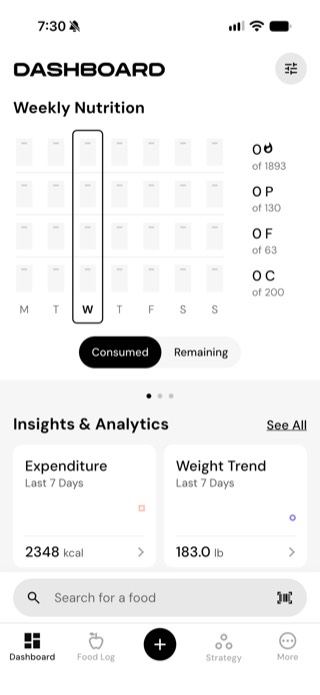
MacroFactor adjusts your calorie target each week based on what you actually logged versus what the scale shows. This removes the guesswork from calorie calculators that often do not match individual metabolism. The app tracks all macros clearly, with protein given appropriate visibility alongside calories.
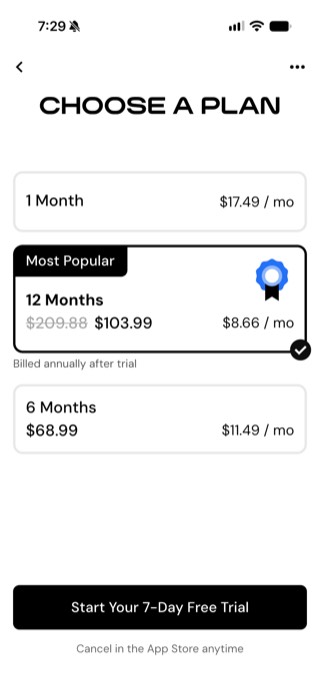
It is subscription-only with no free tier beyond a trial, which puts it at a higher price point than MyFitnessPal Premium in some cases. For people who are serious about body composition and want a calorie target that adapts to real-world data, the algorithm is genuinely useful. For casual tracking, the complexity may not be worth the cost.
Best for: People who want a smarter calorie target that
adjusts to their real metabolism rather than a fixed estimate.
Price: No free tier; $11.99/month, $47.99 for 6 months,
or $71.99/year, after a 7-day trial.
4. MyNetDiary: calorie and macro tracking with an AI coach upsell
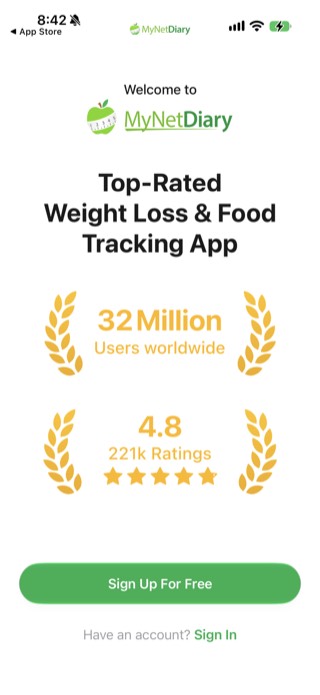
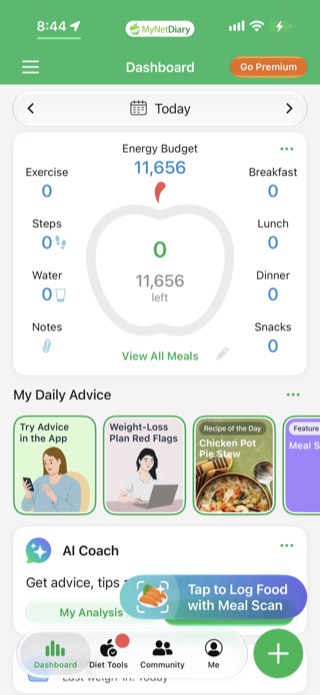
Onboarding runs through a "verified database" pitch and a personalized plan quiz before you reach the app itself. The main Dashboard leads with a big calorie ring (ours defaulted to a very large kilojoule-scale number rather than calories), plus Exercise, Steps, Water, and per-meal tiles. A "My Daily Advice" carousel and an "AI Coach" card push further into content and upsells rather than straight logging.
Protein is not the headline metric here, calories are, and the free experience leans heavily on advice cards and a Go Premium button in the header. For people who want a calorie tracker with macro summaries rather than a dedicated protein tracker, it still works, just with more upsell noise than MyFitnessPal.
Best for: People who want calorie and macro tracking
and do not mind AI coach prompts and advice content in the free tier.
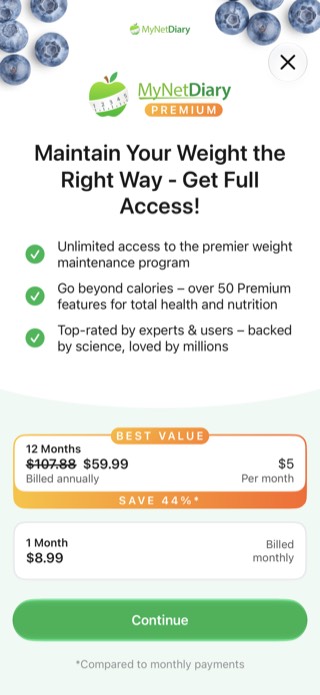
Price: Free tier; Premium is $8.99/month or $59.99/year
(billed annually, discounted from $107.88), with a Premium Plus tier
that adds the AI Coach.
5. Lose It!: best simple entry point
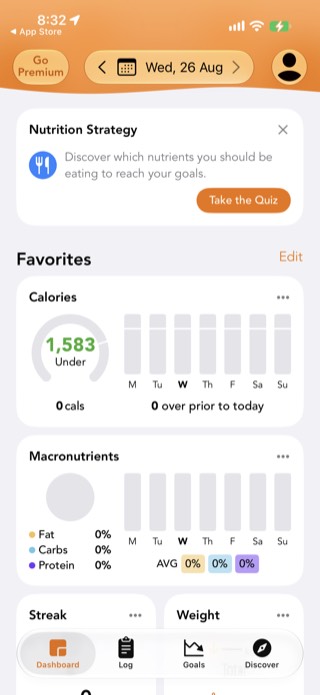
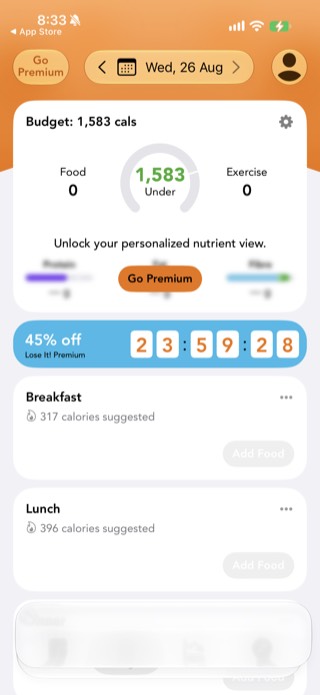
Protein appears as a simple percentage on the free Dashboard alongside fat and carbs, which is more upfront than digging through MyFitnessPal's macro view. A more detailed personalized nutrient breakdown is blurred behind Premium while logging, and the app frequently promotes a discount on its one annual plan.
Streaks are visible on the free Dashboard too. For protein-focused athletes the depth is limited, but for casual tracking or people new to nutrition logging, it is a lower-friction starting point than MyFitnessPal.
Best for: People who found MyFitnessPal too complex and
want a simpler entry point to calorie and protein tracking.
Price: Free tier; Premium is $79.99/year only, with no
monthly plan.

How to choose the right MyFitnessPal alternative
The main question is whether protein or calories is your primary metric. If protein is the number you care most about, whether you are building muscle, managing satiety, or following a high-protein diet, choose an app that keeps protein on the main screen. Proto is built for that workflow.
If you want a broader food tracking experience closer to MyFitnessPal but with better accuracy and no ads, Cronometer is the strongest direct alternative. If you want smarter calorie targets that adapt over time, MacroFactor is worth the price.
For more context on why protein-first tracking tends to produce better results, read why choose a protein-first macro tracker. For a broader guide on picking an app workflow, see how to choose a macro tracking app.
Takeaway
The best MyFitnessPal alternative for protein tracking is the one that keeps protein visible, makes logging fast, and fits your daily routine without feeling like admin. If protein is the primary goal, Proto is the strongest fit. For detailed nutrition data, Cronometer. For adaptive calorie targets, MacroFactor.
Please note: Proto does not provide medical or dietary advice. Always consult a qualified healthcare professional to determine appropriate protein or calorie intake for your needs.
Frequently asked questions
What is the best MyFitnessPal alternative for protein tracking?
Proto is the best MyFitnessPal alternative if protein is your main goal, since it puts protein-first logging front and center instead of behind a calorie-first layout. Cronometer and MacroFactor are strong alternatives if a curated food database or adaptive calorie targets matter more to you than protein-first design.
What is the best free alternative to MyFitnessPal?
Cronometer and Lose It! both have strong free tiers. For protein-first tracking, Proto offers a free trial and is the strongest fit if protein is your main goal.
Why do people switch from MyFitnessPal?
Most people switch because of ads on the free tier, a calorie-first interface that buries protein, or the cost of Premium. For lifters and high-protein dieters, an app that keeps protein front and center tends to work better.
Is there a simpler alternative to MyFitnessPal for protein tracking?
Yes. Proto is built around a protein-first workflow with fewer screens and faster logging than MyFitnessPal. If protein is your main target, it removes a lot of the noise.